



The Endgame: Climate News - January 2026
Signals of scale, strain, and system rewiring in the climate transition
January reinforced a familiar pattern in the climate transition: deployment continues to accelerate, but the systems underpinning it — grids, water, and policy coordination — are under visible strain.
Across Europe, clean power milestones are being hit faster than expected. Wind and solar are no longer marginal additions; they are reshaping the electricity mix, supply chains, and long-term infrastructure planning.
At the same time, stress signals are flashing across energy and resource systems - from record electricity demand in the U.S. to worsening global water scarcity.
This edition looks at what’s working, what’s breaking, and the signals now emerging that could materially shape climate markets and infrastructure over the next decade.
The Good 👇🏻
🔌 EU wind and solar overtake fossil fuels in electricity generation
For the first time, wind and solar generated more electricity than fossil fuels across the EU in 2025, marking a structural shift in Europe’s power system.
This milestone reflects years of cumulative deployment rather than a single policy win - with renewables now operating at scale across most major European markets.
Why it matters: This is not about targets; it’s about physics and asset turnover. As clean power becomes the dominant marginal generator, it reshapes wholesale prices, grid design, and industrial electrification economics across Europe.
🔗 Source: Ember
☀️ EU solar capacity surpasses 400 GW, beating policy expectations
The European Commission confirmed that EU solar PV capacity reached ~406 GW in 2025 - exceeding previous targets and reinforcing solar as a core pillar of Europe’s energy system.
Solar continues to benefit from falling costs, faster permitting in some jurisdictions, and increasingly industrial-scale deployment rather than residential-only growth.
Why it matters: Solar is no longer a supplementary technology. At this scale, it drives grid volatility, storage demand, and new system-level opportunities - especially for flexibility, demand response, and electrified industry.
🔗 Source: European Commission
🌊 North Sea countries agree coordinated offshore wind scale-up
Countries bordering the North Sea agreed to deepen coordination on offshore wind deployment, infrastructure planning, and grid integration - reinforcing the region’s role as Europe’s clean power backbone.
The agreement focuses on long-term capacity expansion, shared infrastructure, and supply-chain coordination rather than isolated national projects.
Why it matters: Offshore wind at this scale is infrastructure, not energy policy. Coordinated build-out reduces costs, de-risks supply chains, and creates durable industrial capacity across ports, manufacturing, and grids.
🔗 Source: Wind Europe
The Challenges 👇🏻
⚡ Record electricity demand strains the largest U.S. power grid
The PJM Interconnection - the largest power grid in the United States - warned that record electricity demand driven by extreme weather, electrification, and data-centre growth is pushing system reliability to its limits.
Peak load risks are rising faster than grid upgrades can be delivered.
Why it matters: Electrification without grid reinforcement creates fragility. This is a reminder that clean power deployment must be matched by transmission, flexibility, and demand-side infrastructure - or reliability becomes the binding constraint.
🔗 Source: Reuters
💧 UN warns of “global water bankruptcy” driven by climate stress
A UN University report warned that the world is entering an era of systemic water scarcity, with climate change accelerating shortages across agriculture, industry, and urban systems.
The report highlights water risk as a cascading economic and geopolitical issue, not a localized environmental one.
Why it matters: Water is foundational infrastructure. Scarcity directly constrains food systems, industrial output, and energy production - making it one of the most underpriced risks in climate markets today.
🔗 Source: UNU-INWEH
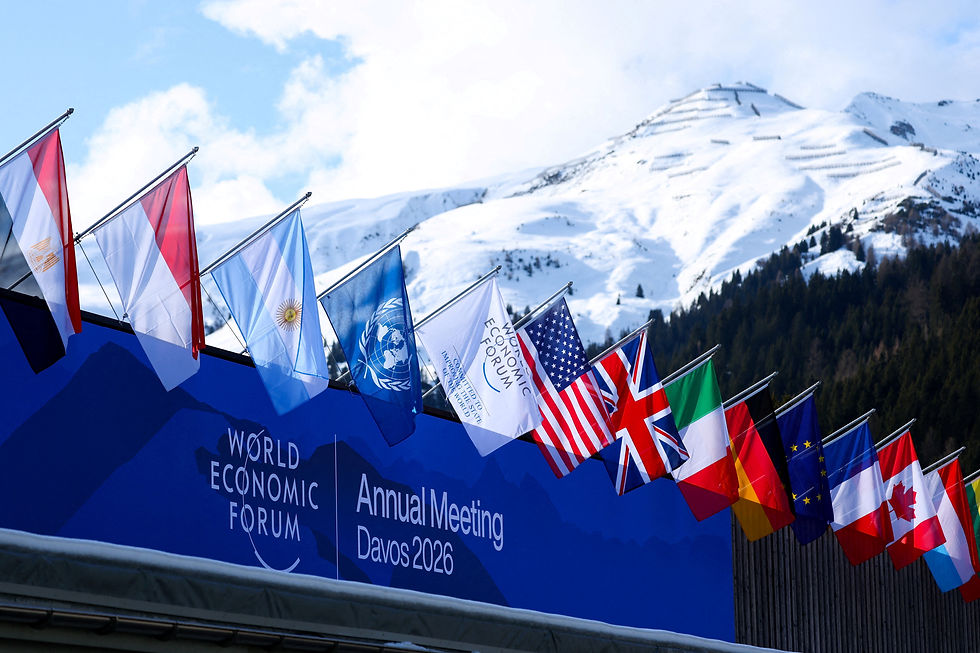
🏛️ Davos exposes widening gap between climate tech progress and policy follow-through
Reporting from Davos 2026 shows that while clean technology deployment continues, political coordination and policy momentum are weakening amid geopolitical tension and economic uncertainty.
The result is uneven execution despite clear technological readiness.
Why it matters: Markets can move faster than politics - but not indefinitely. Policy drift increases execution risk, delays infrastructure, and raises the cost of capital for climate deployment.
🔗 Source: Climate Home News
Ones to Watch 👇🏻
📊 GHG Protocol Scope 2 revision moves into standards review
The consultation phase for revising Scope 2 electricity emissions accounting closed in January, with updates now moving into formal standards review.
Potential changes could affect how companies account for clean electricity procurement and location- vs market-based emissions.
Why it matters: Accounting rules shape behaviour. Any shift in Scope 2 methodology could materially influence corporate procurement strategies, long-term power contracts, and clean energy demand signals.
🔗 Source: Granular Energy
🤝 UK–EU clean energy cooperation deepens
The UK and EU signalled closer cooperation on clean energy security, grid resilience, and technology supply chains through new engagement led by the UK’s Department for Energy Security & Net Zero.
While still early, the move points to renewed cross-border alignment.
Why it matters: Energy systems don’t stop at borders. Greater UK–EU coordination could unlock more efficient infrastructure planning, smoother deployment, and stronger supply-chain resilience across the region.
🔗 Source: GOV UK
🪁 China hits grid-connected milestone for airborne wind system
China reported a grid-connected test of a megawatt-class airborne wind system - an early but notable technical milestone for high-altitude wind generation.
The technology remains high-risk and experimental, but progress is accelerating.
Why it matters: Not all frontier tech will scale - but some redefine the cost curve. Airborne wind sits firmly in the “watch closely” category as energy systems search for higher-capacity-factor renewables.
🔗 Source: Euronews
📘 Final Word
January made one thing clear: the climate transition is no longer constrained by technology availability - it’s constrained by systems.
Clean power is scaling faster than expected. But grids, water, and policy coordination are struggling to keep pace. The next phase of decarbonisation will be won or lost on infrastructure, execution, and system-level thinking - not ambition.
At Endgame Capital, we see this as confirmation of our core view: Markets will keep moving - even when policy drifts.
The winners will be those building solutions that strengthen the systems underneath the transition, not just the technologies on top.
Stay pragmatic.
Stay focused.
The work now is deployment.


